

After a short stint at a training company, I quit. While working there, I sold and delivered their sales workshops.
But I just couldn’t do it; they were too “old-school.” That’s when I decided to start my own training company.
Was I scared? Yes. After seven years in the corporate world, it felt like a big jump into a new abyss.
After much contemplation, I named my new company Applied Strategies. I thought it was a cool name because it gave me some flexibility. (Stupid!)
So, I got business cards, found a nice office to sublease from a consulting firm, and became an entrepreneur.
Fortunately, I landed several clients quickly. They liked the program I’d put together.
But to my horror, I discovered I hated repeating the same workshop.
Strike one. It was a real wake-up call. Yikes! I wasn’t sure if I was heading in the right direction.
Around the same time, I proposed a custom workshop to a growing tech company with offices nationwide. I could tell it was good. Really good.
My competition was a well-known national firm, but the head of training liked my proposal much better. I was sure I’d get their business.
But I’ll never forget the day he called to tell me,
“Much as I love your approach, we can’t work with you. If you got hit by a big Mac truck tomorrow, our entire program would be gone.”
Strike two. I couldn’t compete against the big boys. And I hated doing the same training programs repeatedly because I got bored so easily. I was learning.
Now I faced a real dilemma. Should I keep going down this path? Maybe I wasn’t cut out to be an entrepreneur? How would I make it financially?
Fortunately, the people I leased from invited me to help on a project. Money was running short, so I accepted. It gave me a little breathing space.
It was with Medtronic, a healthcare tech company. They were introducing a device that helped heart transplant patients recover faster with fewer complications.
To learn about it, I went into the operating room with doctors who were learning how to implant it. I wore a sterile gown, a face mask, and a surgical cap—and hoped I wouldn’t pass out.
The patient? A pig. He was under heavy sedation. (He survived.)
Afterward, because I’d learned so much, I put together a product launch sales guide. It included positioning, questions to ask, how to address doctors’ concerns, and more.
The client hadn’t asked for it. I just did it because I knew what their reps needed to succeed. Plus, I had lots of free time and nothing else to do.
Later, in a debrief, we learned that the salespeople loved what I’d created. And Medtronic asked me to work on another product launch.
Calling it a pivotal moment is an understatement. I’d found something that was fun to work on. But I was scared to death. I’d already had two failures.
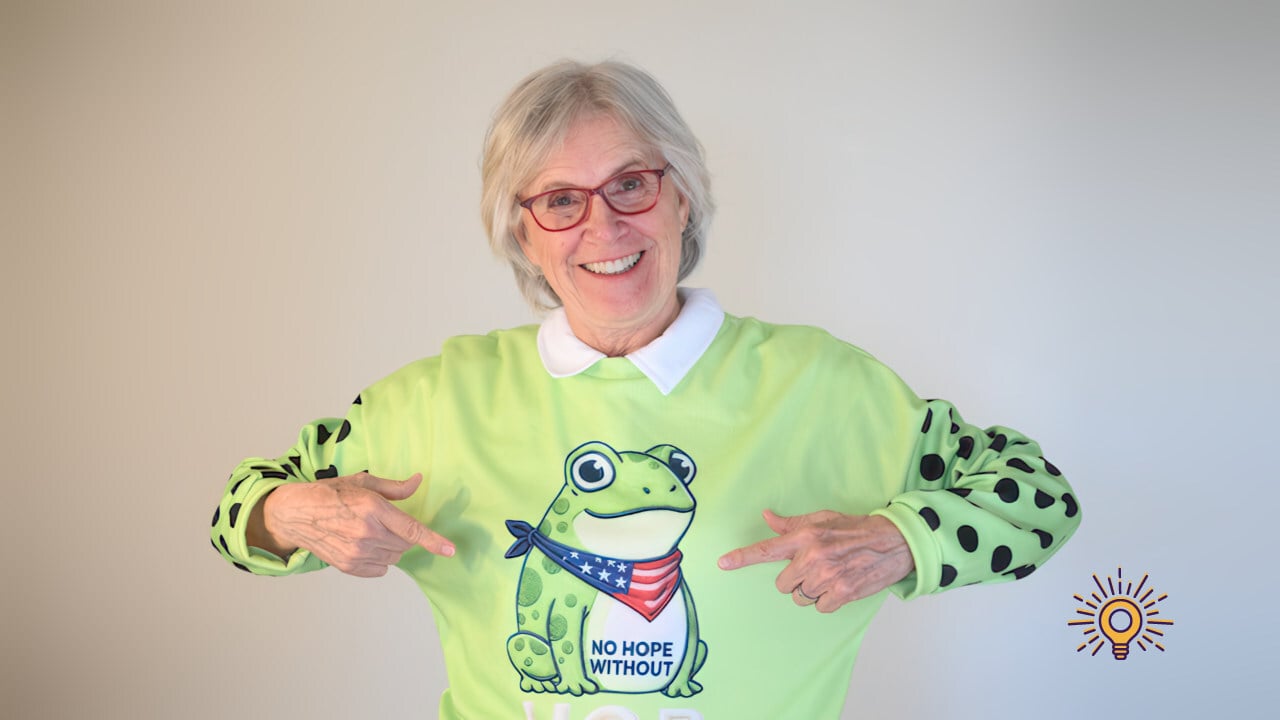
Strike 3: I decided to “kiss the frog”.
I decided to go all in on this new product-launch direction. No one else was filling this gap between sales and marketing. I wasn’t sure how to sell it or how profitable it could be.
But it was exciting. Exhilarating. And a bit edgy for me.
Before long, I rebranded my company to Leapfrog Strategies and focused on helping companies jumpstart their product launches.
All new, all the time. I was in heaven because I was finally playing to my strengths. It became the impetus for all my success in the following decades. That frog turned into the Prince!
What Frog-Kissers Do
When setbacks occur, frog kissers reframe their obstacles into personal challenges. Rather than getting discouraged or blaming others, they ask,
- “How can I tackle this new situation?
- What other options can I try?
- What can I learn by kissing this frog?”
With their creative energy ignited, new options and alternatives emerge. Limitations become possibilities. They experiment with different approaches, willing to grow in the process. In doing so, frog kissers often turn setbacks into successes.